

The MP’s intervention brings food, bedding and household items to fisherfolk and traders who lost everything in the June 21 blaze, as officials call for a national culture of disaster prevention.
Sixty-five victims of the June 21 fire disaster at the Albert Bosomtwe-Sam Fishing Harbour in Sekondi have received major relief support, secured through the decisive intervention of the Member of Parliament for Essikado-Ketan and Deputy Minister for Health, Prof. Dr. Grace Ayensu-Danquah.
The relief items presented include 200 bags of rice, 100 bags of maize, 200 mattresses, 200 buckets, 100 basins, 10 boxes of detergents, 50 gallons of liquid soap, 200 plates and 200 cups — a consignment aimed at restoring basic comfort to households that were left with almost nothing after the fire.
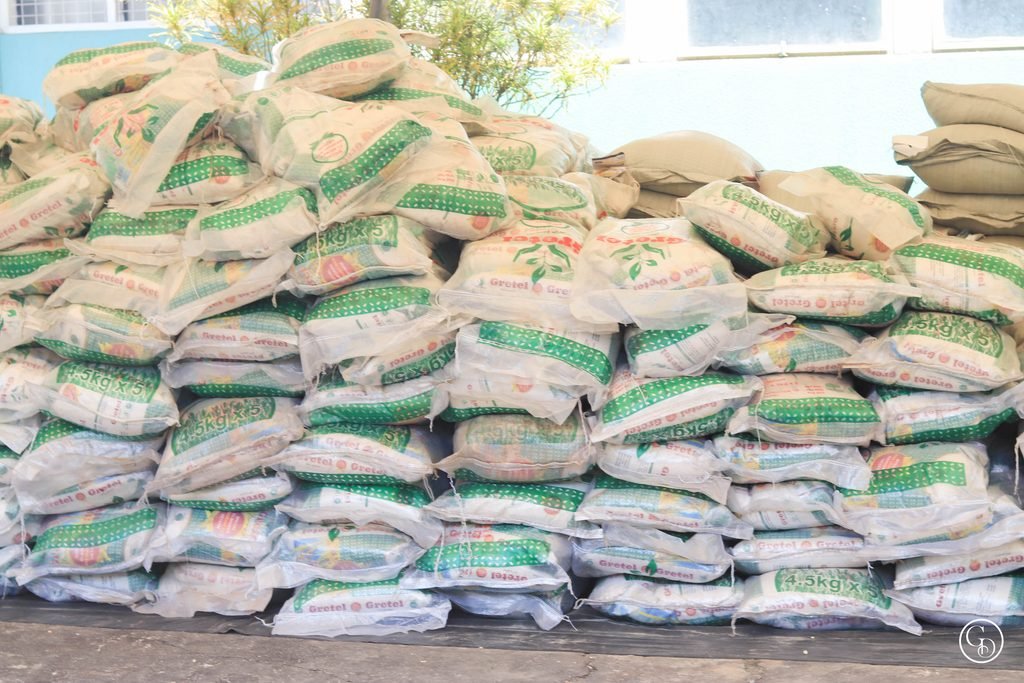
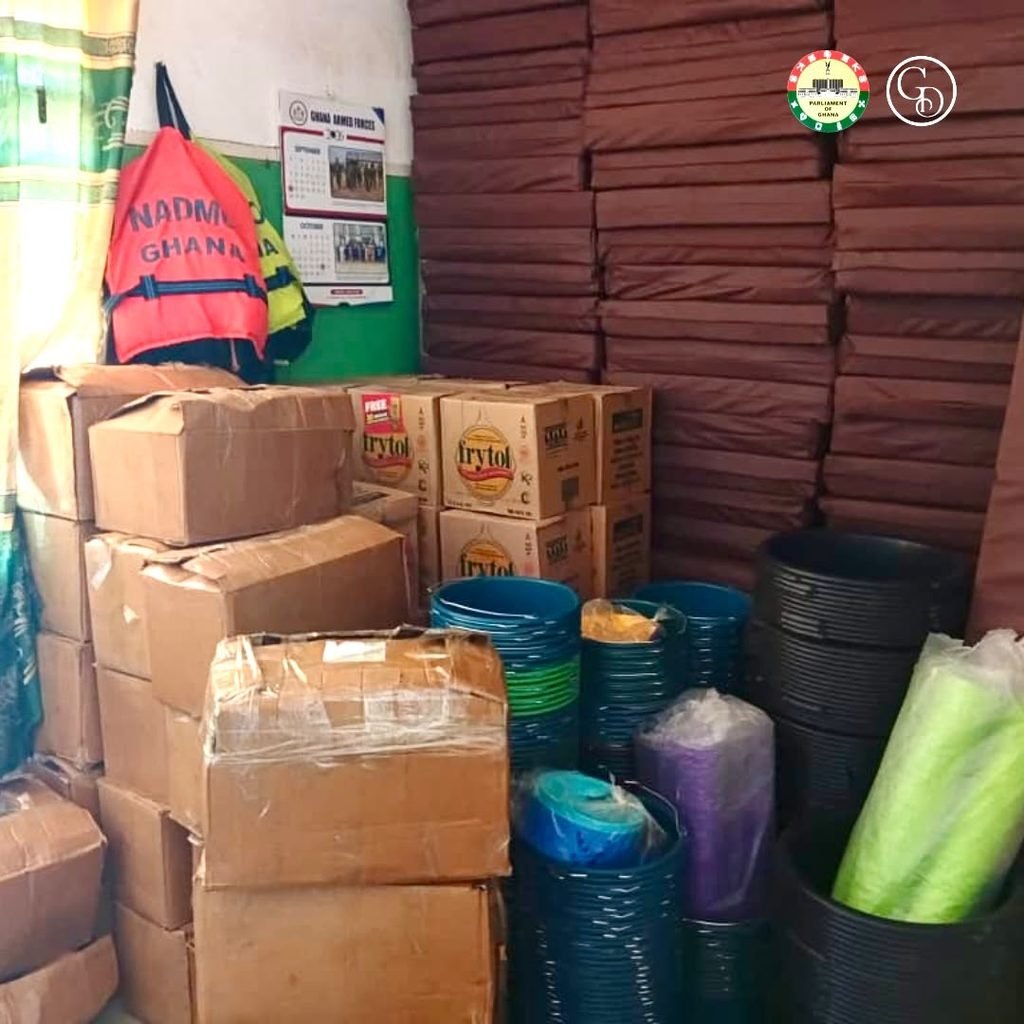
The distribution was carried out by the Sekondi-Takoradi Metropolitan Directorate of NADMO as part of activities to commemorate the 2026 International Day for Disaster Risk Reduction.
A Promise Made at the Scene of the Fire
According to the Metropolitan Director of NADMO, Alhaji Abubakar Kamal Deen, Dr. Ayensu-Danquah did not wait to be petitioned before acting. She personally visited the disaster scene with NADMO officials immediately after the fire, assessed the extent of the damage, comforted and engaged the affected fisherfolk and traders, and pledged to ensure they received urgent support. That visit, he said, was the beginning of the relief effort that culminated in Monday’s distribution.
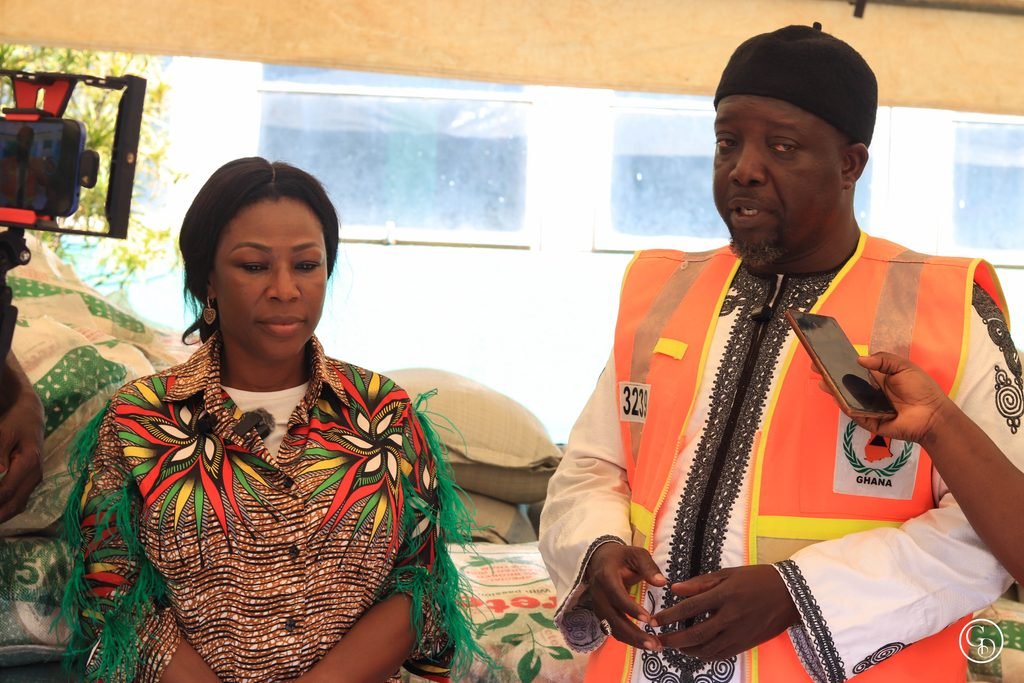
He noted that the MP followed through on that pledge by facilitating the release of the relief items to alleviate the hardship of the victims, describing her intervention as timely and significant for a community still recovering from the shock of the blaze.
For the victims, the timing matters. The fire destroyed property and livelihoods at the harbour, one of the busiest landing and trading points in the Western Region, leaving families not only without shelter and possessions but without the working capital and equipment they need to return to the sea and the market

Advertisement
The event was used to raise awareness on disaster prevention under the theme “Resilience Starts at Home” — a theme officials leaned on heavily, noting that disasters in Ghana are rarely purely natural. Fires, floods and other hazards are frequently worsened by poor planning, unsafe electrical connections, blocked drainage and a general reluctance to treat prevention as a personal responsibility.
Officials including the Municipal Chief Executive, Frederick Faidoo, and the Western Regional Minister, Joseph Nelson, used the occasion to call for collective responsibility in preventing fires, floods and other disasters. They stressed that while government and agencies such as NADMO can respond and coordinate relief, the first line of defence is the citizen — the home, the market stall, the fishing shed — where simple precautions can prevent catastrophe.

Advertisement
The figures presented at the event underline the urgency. The Western Region recorded 207 disaster incidents affecting 4,347 people in 2025 alone. The numbers paint a picture of a region repeatedly hit by fires and floods, with the Sekondi-Takoradi metropolis and its densely built coastal communities among the most exposed.
Such statistics make the International Day for Disaster Risk Reduction more than a ceremonial occasion in the region. The day, marked annually, is intended to shift attention from response to prevention — from the moment a fire breaks out to the decisions made long before it does.
The message from officials was consistent: resilience is not built in offices or in emergency warehouses, but in homes, communities and individual habits. It is built when families check their wiring, when traders store fuel safely, when communities clear drainage before the rains, and when residents learn basic first aid and fire safety.
For the people of the fishing harbour, the distribution provided immediate relief. For the wider region, the event carried a longer-term warning — that without a culture of prevention, the cycle of fire, loss and relief will keep repeating.
Dr. Ayensu-Danquah’s intervention has been widely acknowledged as a model of how a representative can bridge the gap between a community’s suffering and the institutional response available to them.
Officials at the event urged residents, traders and community leaders to treat disaster prevention as a shared responsibility, committing themselves to the spirit of the day’s theme. Government, they said, would continue to strengthen response systems, but prevention must begin where people live.