

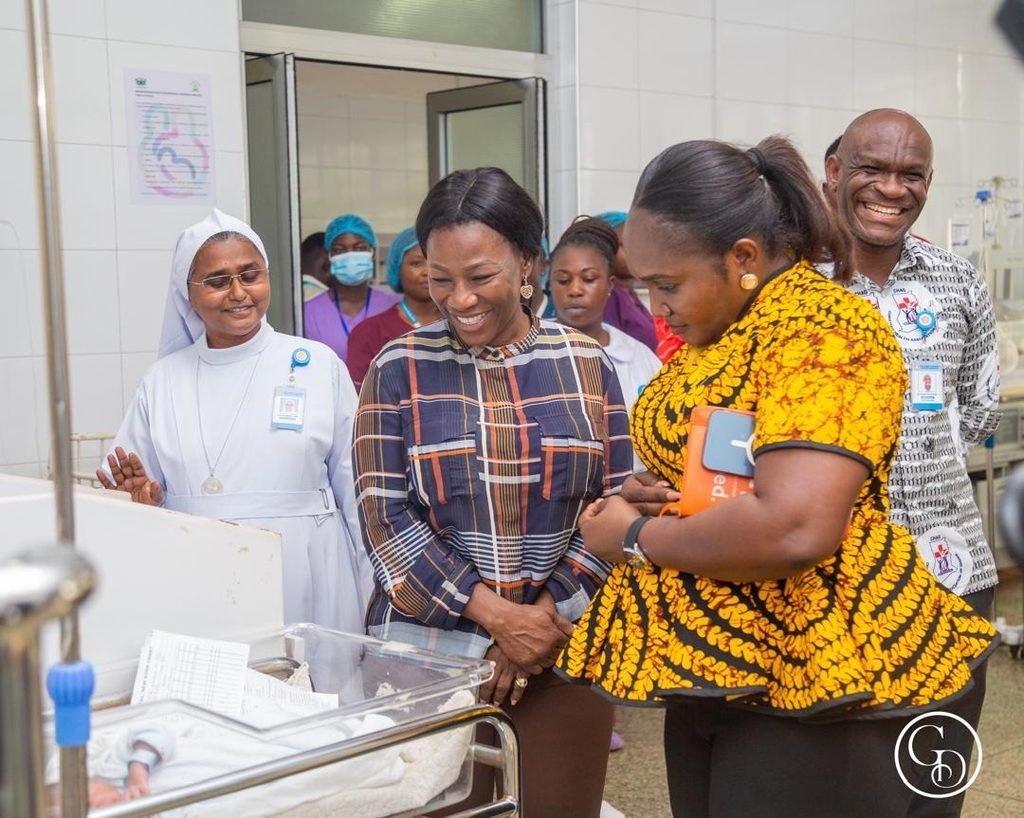
The Deputy Minister for Health, Hon. Prof. Dr. Grace Ayensu-Danquah, has rounded off a two-day official working visit to the Bono Region with a comprehensive walk-through of the Berekum Holy Family Hospital, where she inspected the facility’s operations and reviewed the state of maternal and newborn healthcare delivery.
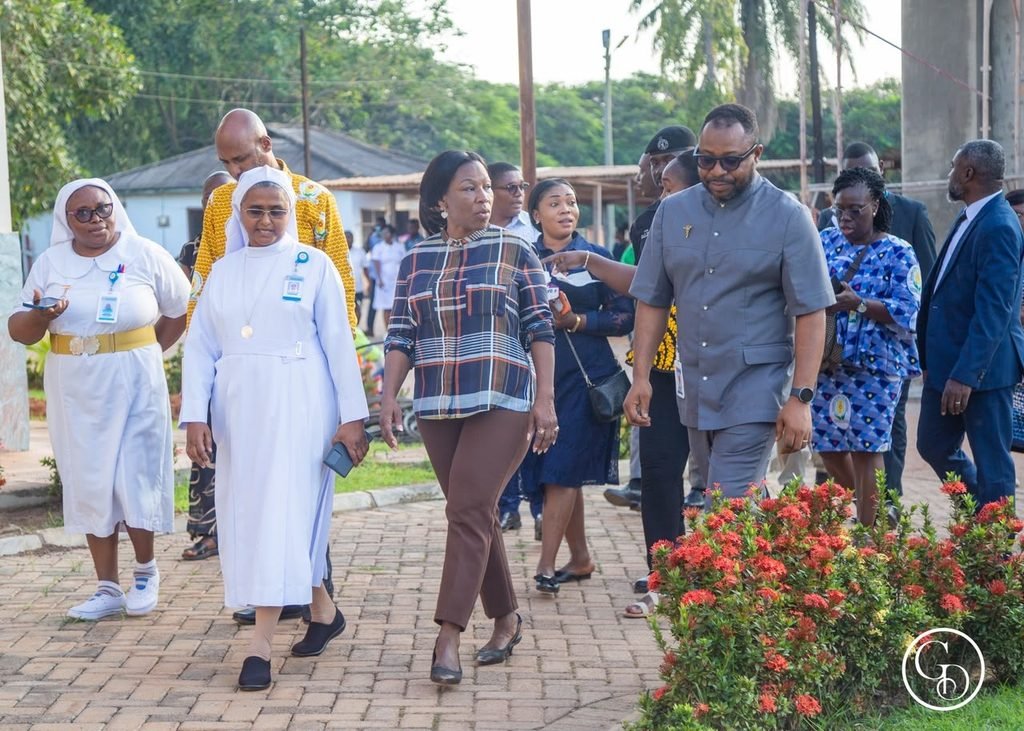
The tour marked the final leg of an engagement schedule that took the Deputy Minister and her entourage across several health facilities and stakeholder meetings in the region, conducted under the auspices of the Maternal Mortality Action and Response Programme (MMARP) — a government initiative designed to identify the practical obstacles behind preventable maternal deaths and to strengthen the systems meant to prevent them.
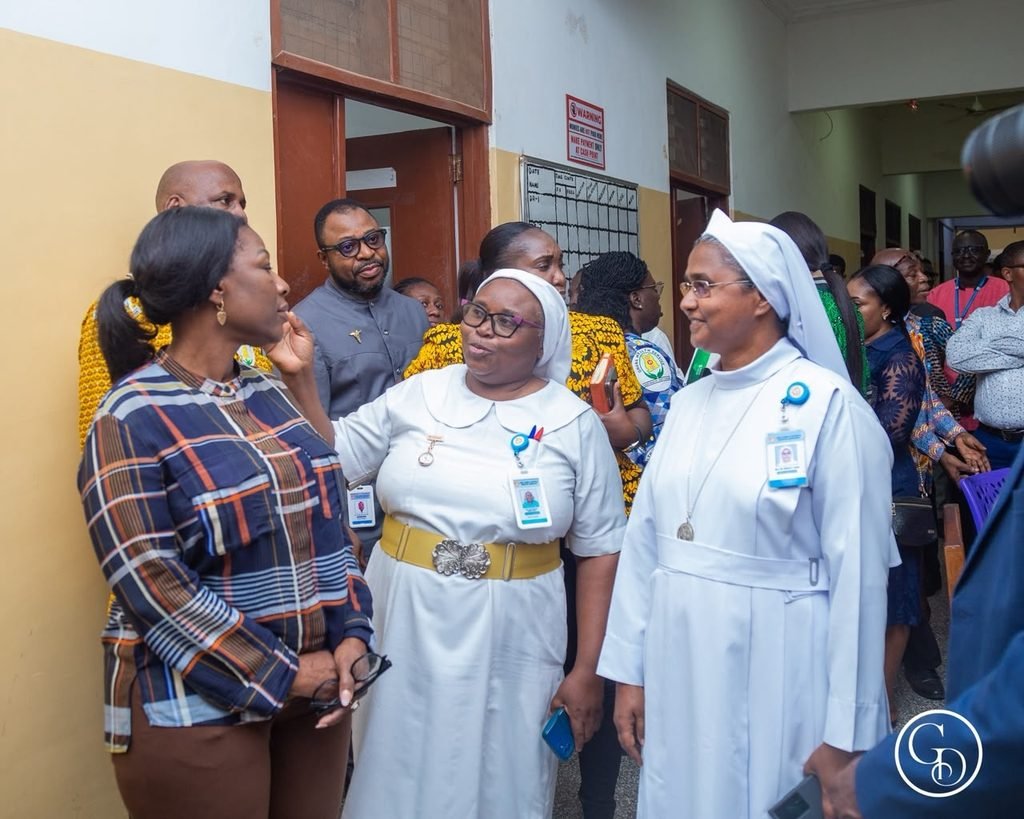
The Berekum Holy Family Hospital, established on 24 April 1948 by the Medical Mission Sisters as a modest clinic, has over the decades grown into a secondary municipal hospital. It operates as a Christian Health Association of Ghana (CHAG) facility under the Catholic Diocese of Sunyani, and today serves as a key referral point for communities within Berekum Municipality and its surrounding districts.
That history mattered to the day’s proceedings. Institutions founded on mission-driven care often carry a particular ethos of service, and Holy Family’s evolution from a small clinic to a secondary-level hospital reflects both the durability of that founding vision and the expanding health needs of the population it serves.

Advertisement
Receiving the delegation
The Deputy Minister and her team were received by the Hospital Administrator, Rev. Sister Reena V. John, who led the delegation through the various departments of the facility. The walk-through provided an opportunity for the visiting team to observe conditions on the ground — not merely to receive briefings in an office, but to see wards, equipment, staffing arrangements and patient flows for themselves.
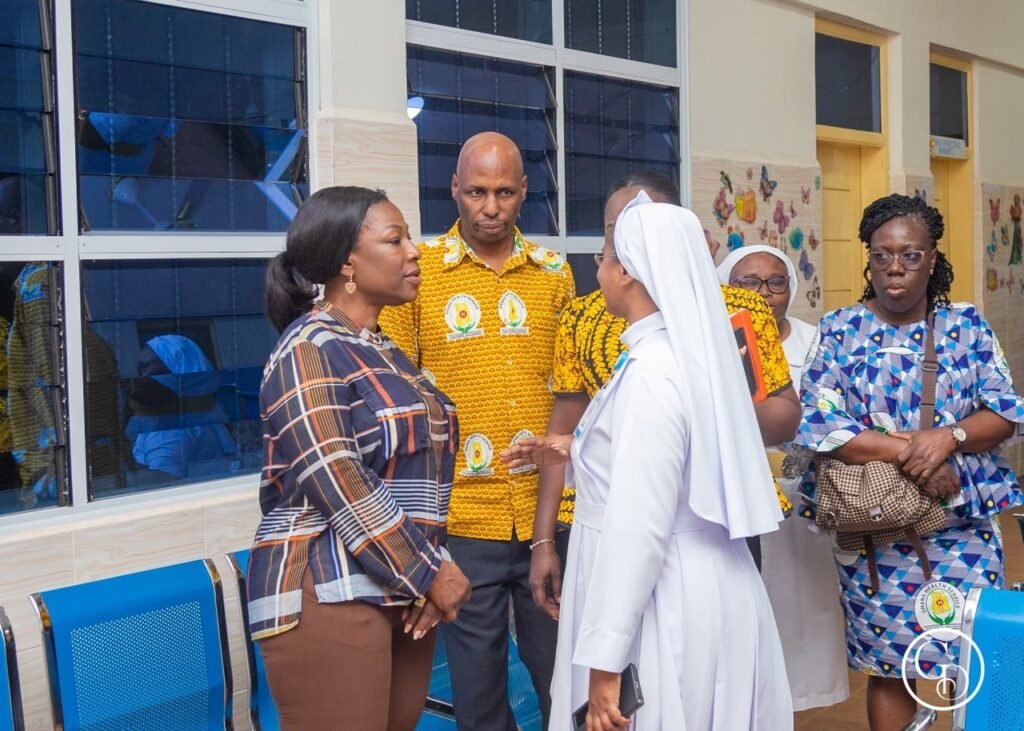
During the tour, Prof. Dr. Ayensu-Danquah interacted with management and staff, engaging them in discussions about the hospital’s day-to-day operations, its service delivery arrangements and the challenges it confronts. The conversations focused particularly on issues affecting maternal and newborn healthcare — the area at the heart of the MMARP agenda and, arguably, the most sensitive indicator of how well any health system is functioning.
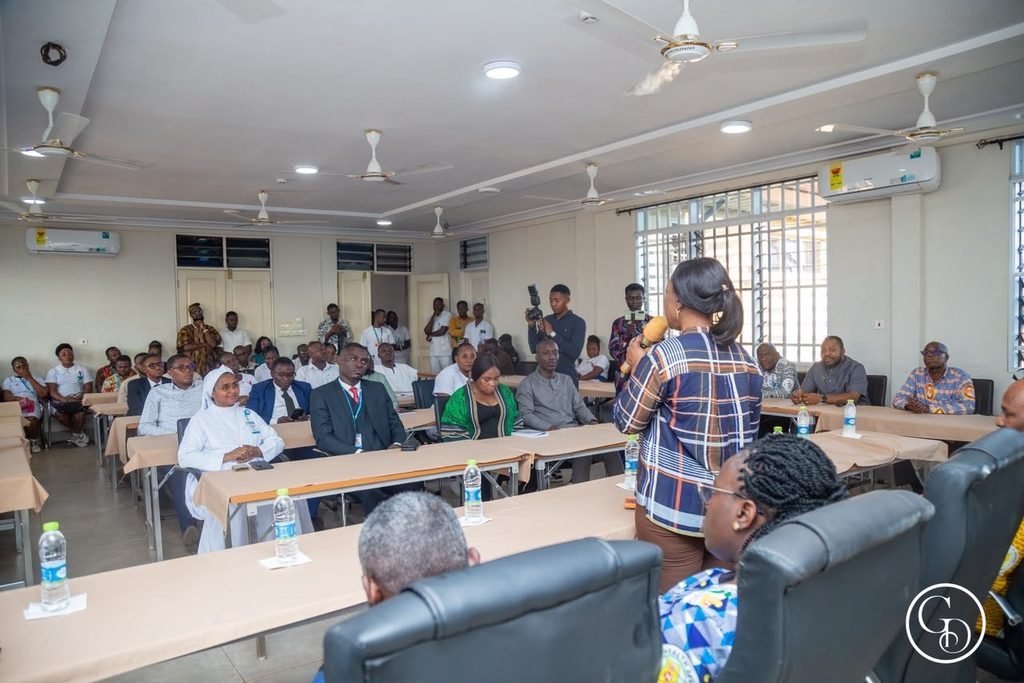
Why maternal health draws this attention
Maternal mortality remains one of the most stubborn challenges in Ghana’s health sector. Deaths in pregnancy, childbirth and the postpartum period are frequently preventable, and they typically trace back to a familiar constellation of causes: delays in deciding to seek care, delays in reaching a facility, and delays in receiving adequate treatment once there. Each of these delays points to a system issue — poor roads, transport costs, inadequate referral links, shortages of skilled birth attendants, blood products, anaesthetic cover or emergency obstetric supplies.
For secondary facilities such as Holy Family, the burden is acute. Such hospitals sit between community-level care and the tertiary teaching hospitals, and they are often where the most complicated cases first arrive. Their capacity — in staff, theatre space, blood banks, incubators and drugs — can determine whether a woman survives a haemorrhage, an obstructed labour or eclampsia.
Visits of this kind therefore serve a purpose beyond ceremonial inspection. They are mechanisms for gathering unvarnished information from the frontline, since the people best placed to describe what is failing are the midwives, nurses, doctors and administrators working in the wards every day.
The wider regional engagement
The Berekum stop was part of a broader programme of engagement with health facilities and stakeholders across the Bono Region. By touring multiple sites, the Deputy Minister’s team can compare notes across facilities — identifying challenges that are local and specific, and those that recur across the region and may require policy or resource responses at a higher level.
The MMARP framework implies a two-way process: listening to facilities about what they need, and holding them to account for the quality and outcomes of the care they deliver. It also implies follow-up — that concerns raised during such visits are logged, escalated and tracked rather than allowed to fade once the delegation departs.
Advertisement
The practical value of the visit will ultimately be measured by what follows it. Facilities like Berekum Holy Family will be looking for tangible outcomes: whether staffing gaps are addressed, whether equipment and supplies are provided, whether referral pathways are strengthened, and whether the challenges raised in conversation translate into commitments with timelines attached.
For the Ministry, the test is whether the intelligence gathered under MMARP is consolidated into decisions — budget allocations, training programmes, infrastructure investments — that move the needle on maternal and newborn survival.
Prof. Dr. Ayensu-Danquah’s Bono Region tour concluded with the Berekum walk-through, but the issues it surfaced are unlikely to conclude with it. In a country where maternal deaths remain a pressing public health concern, the measure of leadership lies less in the visits themselves than in what they set in motion afterwards.