

Renowned Nigerian author Chimamanda Ngozi Adichie has revealed that she no longer wishes to return to Nigeria, saying the tragic death of her 21-month-old son, Nkanu, has permanently severed her ties to her homeland.
In a deeply personal and heartbreaking interview with The New York Times, Adichie opened up about a grief so profound that it has reshaped her relationship with the country that once anchored her identity and fuelled her literary career. The admission marks one of the most candid disclosures of her life, offering a rare glimpse into a private sorrow that has quietly reframed her sense of home.
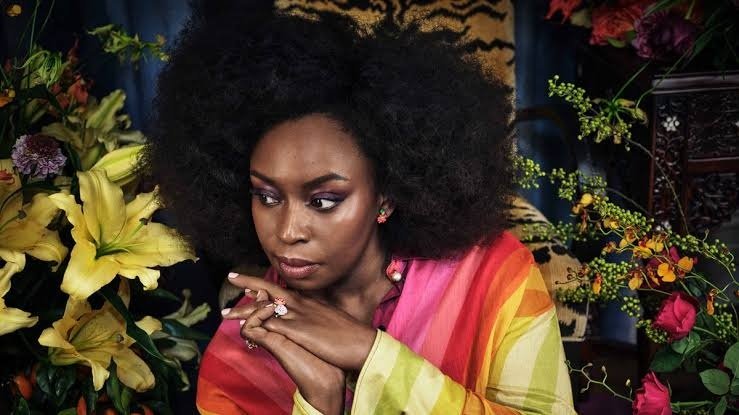
For decades, Adichie lived between two worlds. Her life in the United States, where she studied and eventually settled, was continually punctuated by returns to Nigeria — journeys that shaped both her worldview and her writing. Her novels, among them Purple Hibiscus, Half of a Yellow Sun and Americanah, drew deeply from the textures of Nigerian life: its family dynamics, its politics, its humour, its contradictions. Nigeria was not merely her subject; it was the wellspring of her imagination.
When asked during the interview whether Nigeria still held a primary place in her heart, Adichie responded bluntly. “My feelings toward Nigeria have changed,” she said. “I do not want to go back to Nigeria.”
Advertisement
The declaration landed with weight precisely because it runs against so much of what her readers have come to associate with her. Adichie has long been celebrated as a writer who claims Nigeria unapologetically — insisting on the dignity of African stories, the complexity of African lives, and the necessity of telling them from the inside. Her famous warning against the “danger of a single story” became a rallying cry for a generation of writers and readers across the continent and beyond.
The loss of young Nkanu has cast a heavy shadow over that connection, transforming a landscape of profound personal and cultural meaning into one of unbearable sorrow. The death of a child is an unfathomable rupture under any circumstances, but for a writer whose work has so often circled questions of belonging, memory and inheritance, the emotional geography is especially fraught. Nigeria is no longer simply the place she grew up in or the source of her creative material — it is now bound up with a grief she cannot carry lightly.
Those who have followed Adichie’s career will recognise the resonance such a statement carries. Her relationship with Nigeria has never been simple or sentimental. She has written movingly about its beauty and its brokenness, about the tension between deep love and deep disappointment. She has criticised its governance, mourned its failures, and defended its people with fierce clarity. That complexity has always been part of her appeal — she has refused both uncritical celebration and easy dismissal.

Advertisement
Now, that lifelong dialogue appears to have reached a painful turning point. The revelation is not simply a matter of travel plans or physical presence; it speaks to something more intimate — the way a place can be so thoroughly recoloured by loss that returning to it becomes an act of endurance rather than renewal.
The interview also serves as a reminder of how little the public truly knows about the private lives of the writers it admires. Adichie has spent years speaking publicly about feminism, literature and politics, but her grief over Nkanu has remained largely her own. That she chose to speak about it now, and in such plainly unguarded terms, underscores the magnitude of what she is navigating.
For a global readership, the news is jarring in part because Adichie has long been regarded as one of Nigeria’s most eloquent ambassadors — a writer who carried the country with her wherever she went, whose work made Nigerian life legible to millions who had never set foot in it. To hear her say she does not wish to return forces a reckoning with the reality that even the most celebrated voices are, first and foremost, people carrying wounds that public success cannot heal.
Her literary legacy remains intact, her influence on contemporary African writing beyond question. But the revelation adds a new, somber chapter to her story — one in which the nation that made her a global figure is now the nation she associates with her greatest pain.
The weight of her words will linger long after the interview fades from headlines. In them lies not only a mother’s grief, but a profound meditation on home, loss and the ways in which the places that define us can, in time, become the places we can no longer bear to face.